Ask around Ajax long enough and you'll hear the same rule of thumb: north for new construction and bigger floor plans, south for mature trees, lake access, and character. It's a clean story. It's also not what the pricing shows, and the fault line that actually explains where the money goes has nothing to do with compass points.
The Story Everyone Tells
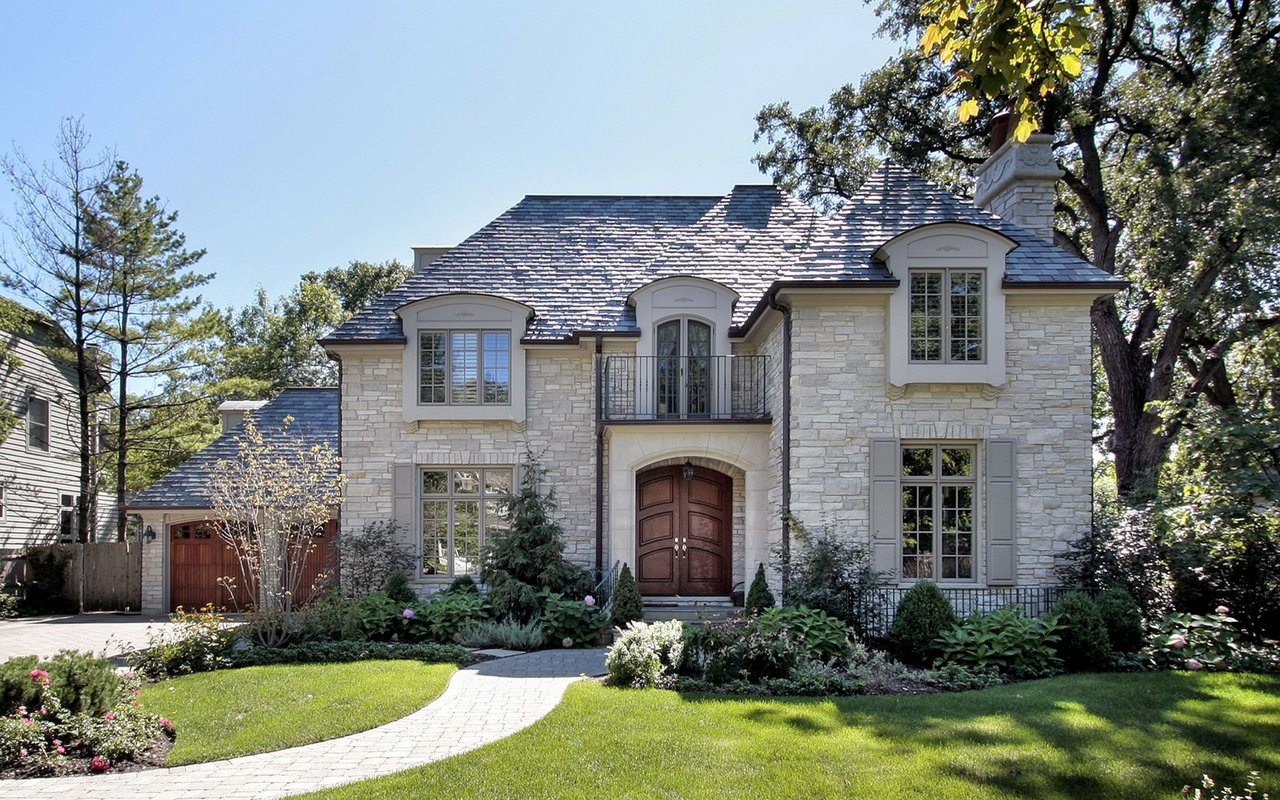
The north-south framing isn't invented out of nowhere. Northeast Ajax has filled in over the past decade with freehold towns built by Tribute Communities under names like Imagination and Mariner Enclave, alongside product from Coughlan Homes, most of it with 9-foot ceilings and open-concept layouts. That same corner of town is also where the master-planned Salem and Audley communities are still under active construction, adding family-oriented streets and park links that didn't exist a generation ago.
South and west Ajax tell a different story on purpose. Streets in Southwood and Westney Heights were built out decades earlier, with deeper lots and older trees, while the historic Pickering Village pocket on Ajax's west edge carries its own established, walkable character. Buyers who want that settled feel tend to gravitate toward these areas, often trading square footage to get it, and the Waterfront Trail along Lake Ontario adds another draw for the town's southern stretch.
So the shorthand makes sense on its face: newer and bigger up north, older and rooted down south. The problem shows up the moment you look at where the actual price gap sits.
Where the Price Gap Actually Sits
Ajax's own submarket breakdown runs seven areas: Central Ajax, Central East, Central West, Northeast, Northwest, Southeast, and Southwest. As of mid-2026, the least expensive of the seven is Southwest, averaging around $722,000. The most expensive aren't in the north the way the story predicts either, they're Central West and Northwest, both averaging north of $1,000,000.
The compass direction predicts less about price than most buyers assume. Product type and proximity to downtown now explain more of the gap than north or south ever did.
That's a spread of roughly $300,000 between two areas that don't sort cleanly along a north-south line. Southwest sits in the southern half of town and is the cheapest submarket. Central West and Northwest sit toward the middle of the map and command the highest averages. If the old rule held, the priciest pocket would be somewhere lakeside in the south. It isn't.
Property type complicates the picture further. Freehold townhomes across Ajax currently average $750,000 to $950,000, with condo townhomes running $595,000 to $850,000. Executive end units in newer Tribute and Coughlan communities, the kind with walk-out basements and extra windows, push past $900,000 and into seven figures regardless of which side of town they're on. A buyer comparing a modest Southwest bungalow to an executive end-unit town in the Northeast isn't really comparing north to south. They're comparing product type and build year, which happen to cluster unevenly across the map rather than splitting along it.
What's Actually Moving the Line
The forward-looking piece is what makes this worth writing about now instead of filing away as a curiosity. Ajax's downtown core, centered on Harwood Avenue, is in the middle of the most significant density push the town has seen. Three separate tower proposals have surfaced for that same corridor in recent years:
- Harwood Plaza, at Harwood Avenue South and Hunt Street: a three-tower redevelopment proposed by First Capital in February 2025 and designed by SvN, running 16, 23, and 30 storeys across a 1.15-hectare site and adding roughly 863 residential units plus ground-floor retail. It's the first phase of a larger master block plan for the aging 1960s-era mall site, and it remains under review by the Town of Ajax as of the most recent public filings.
- 425 Bayly Street West, near the Ajax GO station: a proposal for six towers ranging from 50 to 60 storeys and roughly 3,727 residential units, along with retail, office space, and a central parkette, planned in two construction phases.
- 154 Rossland Road East: a Ledim Developments proposal for two 26-storey towers with 548 units, an eight-storey podium, and a share of affordable housing.
Add those three proposals together and you get more than 5,100 new residential units proposed for a town of roughly 116,000 people, almost all of it concentrated within a short walk of downtown and the GO line rather than spread evenly across Ajax's seven submarkets. None of this touches detached-home neighborhoods directly. It's an addition to the Central Ajax corridor specifically, and that's the part the north-south framing misses. The submarket most likely to look different in a decade isn't defined by which direction you drive from the lake. It's defined by proximity to Harwood Avenue.
What This Means If You're Choosing a Side of Town
For a move-up buyer comparing a newer Northeast subdivision to an established Southwest street, the honest answer is that both are relatively insulated from what's coming downtown, at least in the near term. Communities like Imagination and Mariner Enclave sit far enough from Harwood Avenue that the tower pipeline is unlikely to touch daily life for years. The same is largely true of Southwest's older stock.
Central Ajax is a different calculation. Buying close to Harwood Avenue today means buying into a corridor that could look meaningfully different within a decade: more retail at street level, more transit demand, and construction disruption in the near term before any amenity upside shows up. That's not automatically a downside. Buyers with a longer horizon sometimes prefer getting in ahead of density rather than after it, since infrastructure and retail investment tend to follow rezoned corridors. It's simply a different bet than "new versus established," and it deserves to be weighed on its own terms rather than folded into a compass direction.
The Numbers Behind the Comparison
| Segment | Time Window | Average Price |
|---|---|---|
| Southwest Ajax (least expensive submarket) | mid-2026 | ~$722,000 |
| Central West / Northwest Ajax (most expensive submarkets) | mid-2026 | $1,000,000+ |
| Detached, town-wide | January 2026 | $981,931 |
| Semi-detached, town-wide | January 2026 | $812,667 |
| Freehold townhome, town-wide | January 2026 | $752,250 |
| Condo apartment, town-wide | January 2026 | $401,951 |
In January 2026, Ajax recorded 54 home sales totaling more than $47.5 million, with detached homes accounting for 37 of those sales. Inventory that same month sat at roughly 2.9 months, tight enough that well-priced homes in any submarket were still moving without much friction. The takeaway isn't that one part of Ajax is objectively better priced than another. It's that what a buyer pays is shaped more by unit type, lot age, and now, proximity to the downtown pipeline, than by which side of the highway a street happens to fall on.
A Few Direct Answers
Is North Ajax always newer than South Ajax? Mostly, but not uniformly. Northeast Ajax, including the master-planned Salem and Audley communities, is newer construction. Central West and Northwest, which sit further from the lake, mix newer executive product with established streets, which is part of why they don't follow a simple north-equals-new pattern.
Will the Harwood Plaza towers affect nearby home values? It's too early to say with confidence since the project remains under review. What's clear is that Harwood Plaza is one of three active tower proposals concentrated in the same downtown corridor, which makes Central Ajax the part of town most likely to change over the next decade, for better or worse depending on what a buyer wants out of the location.
Where should a value-focused buyer look right now? Southwest Ajax currently carries the lowest submarket average, around $722,000, but that reflects older housing stock rather than a hidden bargain. The better question isn't which submarket is cheapest today. It's which trade-off, new construction, established character, or proximity to future density, actually matches how you plan to live.
Talk It Through Before You Pick a Side of Town
Compass points make for an easy shorthand, but they're not carrying the weight buyers assume they are in Ajax right now. If you're weighing a Northeast townhome against a Southwest detached, or trying to figure out whether buying near Harwood Avenue makes sense given what's proposed for the corridor, that's exactly the kind of decision worth thinking through with someone who tracks this market closely. Fraser & Co. works with buyers across Durham Region and the GTA East to sort through submarket data, timing, and what a specific price actually buys before an offer goes in. Speak with a Human and get a straight answer instead of a compass direction.